Introduction to System Design
An introduction to what system design is and how we think about it.
System Design is how we plan and structure a software application so that it can try to handle real-world users, data, and traffic reliably without crashing or slowing down.
Instead of writing lines of code, we are deciding how our servers, databases, and networks will connect and talk to each other.
1. The Core Layers of a System
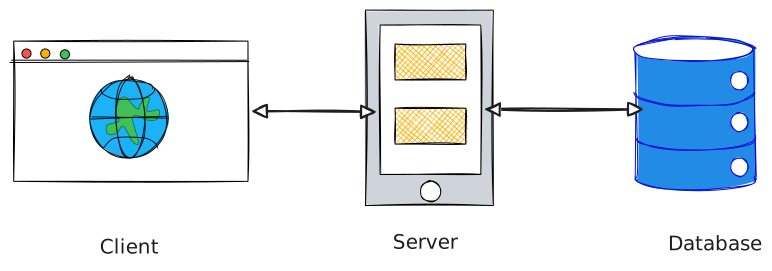
Many systems we design are made of three fundamental layers:
- The Client (Frontend): The user interface (like a mobile app or a web browser) that initiates requests.
- The Server (Backend): The application logic that processes incoming requests, applies business rules, and interacts with other services.
- The Database: The storage layer where data is persisted (saved) and retrieved.
2. What We Actually Do as System Designers
When we design a system, we make concrete technical decisions across two main areas:
Software & Data Flow (How the application is organized)
- Communication (APIs): Deciding how different parts of our app send messages to each other.
- Data Structure: Choosing how we organize our information in the database (like creating tables with rows and columns).
- Services: Deciding whether to build one giant program (a monolith) or break it into smaller, specialized programs (microservices).
Infrastructure & Scaling (How we run and grow the app)
- Scaling: Adding more computers (servers) when we get too much traffic, and using a load balancer to distribute the visitors evenly across them.
- Caching: Storing popular info in a fast, temporary memory slot so we don't have to keep searching the main database.
- Reliability: Preparing backup servers so if one computer crashes in the data center, another one can take over immediately without the users noticing.
3. How We Evaluate a System Design
When we design a system, we often guide our decisions using two core concepts:
What the App Does vs. How It Performs
Before we design anything, we generally need to know:
- What it must do (Functional): The actual features we want (for example, "users can upload photos" or "users can send messages").
- How well it must do it (Non-Functional): The performance goals (for example, "pages should load in under 1 second" or "the website should have minimal downtime").
The Art of Trade-Offs
In system design, there is no "perfect" solution. Every choice we make has trade-offs:
- If we make the site faster by saving data in temporary memory (caching), we risk showing outdated info if the main database changes.
- If we make the site safer by copying data to multiple databases, we spend more money and make our setup more complicated.